
Deadhead Miles: Costs and Opportunities to Your Bottom Line
Deadhead miles are costly from a financial, safety, and environmental perspective. See 7 strategies to minimize costs and maximize your revenue.
Key points:
- Deadhead miles are the miles which truckers drive with an empty trailer between loads
- Deadhead miles are costly to truckers. Reducing deadhead and managing rates with deadhead in mind can lower costs to truckers by saving them time, reducing fuel spend, and minimizing equipment depreciation.
- Below are 7 tips on how to account for and reduce deadhead.
What are deadhead miles?
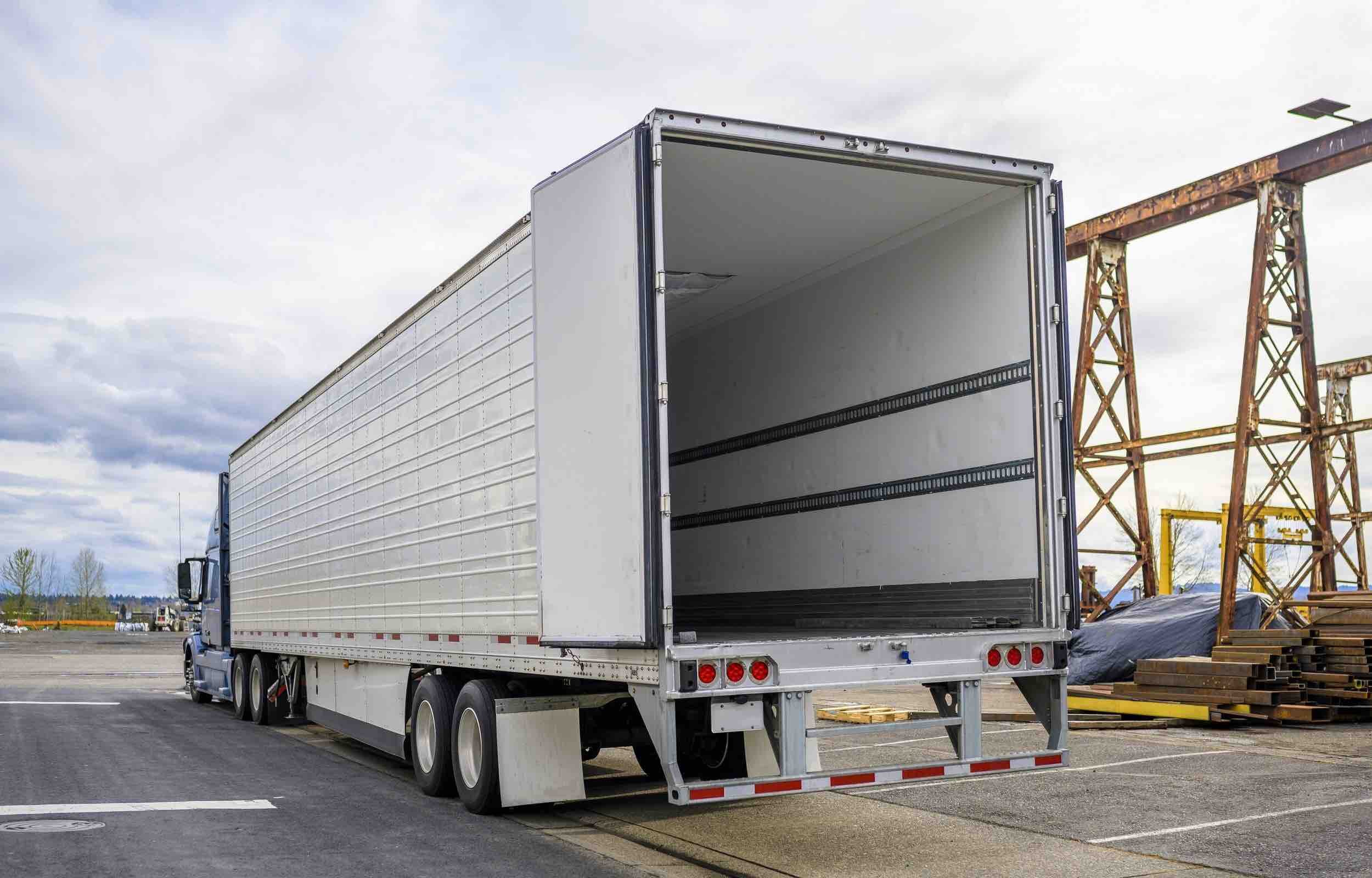
"Deadhead miles" are the miles which truckers drive with an empty trailer between loads. It is not to be confused with bobtailing, which is driving a tractor unit without a trailer. Although deadheading is an inevitable part of trucking because of the constant need to drive empty after delivering your load in order to pick up the next, it can come with many costs, from financial to safety to environmental. Let's take a look at these costs and some ways to minimize them and increase revenue.
The cost of deadhead miles
Financial
As an independent trucking business, and depending on your contract, deadhead miles can cost you. Unlike company drivers, it can be common for owner-operators and carriers to only get paid when your trailer is full of freight. Common estimates claim that 35% of all trucking is deadhead miles. So, if you drive your truck 100,000 miles in a year per the industry average, you are only earning revenue for 65,000 miles.
This costs you not just with your time, but also in fuel and depreciation of your equipment.
Deadhead miles burn diesel fuel without revenue to cover the fuel cost. Keeping with our example, if you drive your truck 100,000 miles a year, and your truck gets 6.5 miles per gallon, you must buy 15,385 gallons of diesel in a year. At $4.00 a gallon, you spend $61,540 in fuel in a year. If 35% of your miles are deadhead, you might be driving 35,000 miles at a cost of $21,539 with no revenue to cover that cost. Additionally, you'll have to pay taxes on any fuel purchased (see more on International Fuel Tax Agreement (IFTA)) whether for loaded or unloaded miles.
The 35,000 miles you're driving but not earning revenue also add up in the form of depreciation of your vehicle, with added wear and tear, increased maintenance and repair costs, and reduced resale or trade-in value.
Safety
Deadheading presents significant safety risks. In fact, a deadheading tractor trailer is 2.5 times more likely to be involved in a crash.
Hauling a full load, the tractor trailer weight provides adequate stability. But a tractor with an empty dry van trailer weighs about half of a loaded trailer. Under certain conditions, the empty trailer becomes unstable and difficult for the driver to control. Wind, rain, snow and fog can all impair the driver's visibility and control over the trailer, and can cause it to heavily sway, tip, or even overturn.
In such a situation, it's recommended to travel at a slower speed and/or pull over until conditions improve for the safety of you as driver and other motorists on the road.
7 tips for managing deadhead miles
Below are 7 things you can do to account for and reduce your deadhead miles:
- Factor in the cost of any foreseeable deadhead miles into your bid to ensure revenue earned exceeds the cost to transport the load. This is the case at TrueNorth, as our load board factors in deadhead miles from your current location to the final delivery point.
- Calculate your cost-per-mile (CPM) and only secure loads that meet or exceed it. Owner-operator, Tom, uses CPM to ensure that, even accounting for deadhead miles in his trips, he can still be profitable. He looks at the miles he drives from the time he leaves his house until the time he gets back, rather than any particular load within the trip, and knows how much he needs to gross for the entire trip in order to earn a profit. That way, he doesn't need to worry about deadhead miles cutting into his earnings.
- Example: Tom's trip will be approximately 2,000 miles. If his CPM is $1.50, he would need to gross $3,000 for the entire trip to breakeven. Tom finds a load paying $2,000 on the way out and another paying $2,500 coming back. He may have to deadhead between loads, but Tom doesn't worry about that since the $5,000 over 2,000 miles ($2.50 RPM) more than covers his break-even CPM of $1.50.
- Look for loads that include an arrangement for hauling return freight. Hauling both ways will help to cut out deadheading and generate added revenue.
- Make use of spot markets to reduce the distance you drive empty to pick up and try to find delivery points near your next prearranged load. It won't always be easy to connect the dots on a map but you must work at reducing that 35% average deadhead miles in order to earn a good living.
- Use load boards to find nearby pickups going to areas where demand for trucks is high.
- Use your GPS to ensure you have accurate directions to the next shipper or receiver so that you don't create more deadhead miles from a wrong turn.
- Get to know and trust brokers and shippers who employ honesty and integrity. Build a reputation for quality service so others know that you, in turn, can be trusted. These relationships are important to your business and your ability to secure the best loads.
Deadhead miles are a reality of the trucking business that will undoubtedly always be with us. However, doing everything possible to reduce deadheading is a great way to earn a higher revenue, reduce your costs, and decrease harmful emissions.
Relevant articles:
How to Get the Best Freight Rates
Cost-Per-Mile Calculator
Fuel Economy: Part 1 - The Driver Makes All the Difference